That's why the built-in coffee bar has become one of the most requested features in kitchen design-builds. Across Boulder County, Denver, and Fort Collins, homeowners are turning unused closets, awkward wall nooks, and dead kitchen corners into dedicated coffee stations.
This guide walks through the design styles worth considering, the features that make a coffee bar actually functional, and the materials that hold up to daily spills. We'll also cover where these stations fit best in a home.
Key Takeaways
- Built-in coffee bars have become a standard feature in modern kitchen design-builds
- Closets, nooks, and pantry corners are prime candidates for conversion
- Storage, outlets, and lighting matter more than square footage
- Quartz countertops offer the best stain resistance for daily coffee spills
- Local, custom cabinetry solves awkward layouts better than off-the-shelf options
What Is a Built-In Coffee Bar?
A built-in coffee bar is custom cabinetry permanently integrated into your kitchen, pantry, or an adjacent nook. Unlike a portable coffee cart or a countertop station you can move on a whim, it's fixed in place and built to match its surroundings.
The difference shows up in the details. A built-in coffee bar matches the rest of your kitchen:
- Shares cabinetry color and hardware finishes
- Uses matching countertop material
- Reads as an intentional part of your home's design, not an afterthought parked in a corner
Demand for these built-ins keeps climbing. According to NKBA's 2026 Kitchen Trends Report, dedicated beverage areas like coffee stations rank among the top requested kitchen features, with 85% of surveyed industry professionals citing them. Homeowners want permanent space for their espresso machines, not just a spot on the counter.
Popular Built-In Coffee Bar Design Styles & Inspiration
There's no single "right" way to build a coffee bar. The best layout depends on your available space, your kitchen's existing style, and how you actually use the area each morning.
Space-Saving Layouts
That unused coat closet by the kitchen entrance? It might be your best coffee bar candidate. Converting a closet or an awkward wall jog reclaims dead space without touching your main kitchen footprint. This works especially well in older homes with oversized entry closets or homes where a hallway dead-ends into blank wall space.
If a full conversion isn't an option, matching your coffee bar to the existing cabinet color, hardware, and countertop material creates the same seamless effect. Instead of looking like a separate addition, it reads as though the kitchen was always designed around it. This approach fits particularly well in breakfast nooks, where the coffee bar becomes a bridge between the kitchen and the eating area.
Multi-Purpose & Concealed Designs
Some homeowners pair their morning coffee station with evening entertaining needs. A shared sink and mini-fridge let one built-in serve coffee at 7 a.m. and cocktails at 7 p.m., making efficient use of plumbing and refrigeration you're already installing. This dual-purpose setup works especially well in open-concept homes where one built-in needs to multitask.
For a cleaner main kitchen, pocket doors or accordion panels let you conceal a fully equipped coffee station behind closed doors. NKBA reports that 87% of homeowners want pantries concealed behind cabinet doors or panels, a preference that extends naturally to coffee bars tucked into scullery-style spaces.
Style-Forward Choices
Not every coffee bar needs to blend in. Bold backsplash tile, two-tone cabinetry, or a contrasting stone slab can turn the space into a focal point rather than a hidden utility zone. Think hexagonal tile in black, white, and gray, or a stacked stone backsplash against light cabinetry.
On the opposite end, modern homes often favor hardware-free cabinetry with flat panels and integrated handles. Storage stays hidden, counters stay clear, and the whole station disappears into the kitchen's clean lines until you need it. This look works well in condo kitchens and open-concept spaces where visual clutter competes for attention.
Must-Have Features: What to Include in a Built-In Coffee Bar
A good-looking coffee bar means little if it doesn't function well every single morning. These are the features worth prioritizing:
- Dedicated storage - drawers and cabinets sized for mugs, K-cups, filters, syrups, and linens so nothing lands on the counter
- Appliance space and outlets - a pull-out shelf or appliance garage sized for your espresso machine, plus built-in electrical planned before cabinets are installed
- Optional plumbing - a bar sink or water-line hookup for easy filling and cleanup (a popular upgrade, though not a requirement)
- Task and ambient lighting - under-cabinet lighting for early risers, paired with a pendant or sconce for style
- Display and workspace - open shelving or glass-front cabinets to show off your mug collection, plus enough counter space for your machine to actually operate
- Finishing touches - a mini-fridge for creamer, a small lamp, or a chalkboard for writing the day's brew
Electrical planning deserves particular attention. Countertop receptacle rules and GFCI requirements can apply differently depending on whether your station includes a sink. Coordinate with your designer and electrician before cabinet drawings are finalized to avoid costly changes later.
Choosing the Right Materials for Cabinets, Countertops & Backsplash
Material choices determine how your coffee bar looks in year one and how it holds up in year ten.
Countertop Comparison
| Material | Strengths | Trade-offs |
|---|---|---|
| Quartz / engineered stone | Nonporous, stain resistant, no sealing required | Not fully heat-proof; use a trivet |
| Marble | Elegant, timeless look | Porous; acidic spills like coffee or citrus can etch the surface |
| Butcher block wood | Warm, natural texture | Needs regular sealing; avoid standing water near sinks |
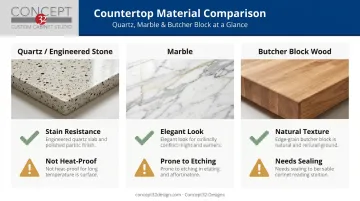
For a station that sees daily coffee drips, quartz is the practical winner. It resists staining without the maintenance routine marble or wood requires.
Cabinet Construction, Doors & Hardware
Coffee bars take a beating from daily use and occasional moisture, so cabinet quality matters just as much as what's on top of it. Concept32 Designs builds every cabinet locally in Boulder County using master builders and quality engineered wood, giving each piece the durability to handle years of spilled creamer and steamed milk without warping.
Door style shapes how much of that construction shows. Glass-front doors, whether clear or reeded, put your mug collection and glassware on display, while solid panel doors hide countertop clutter and small appliances behind a clean face. Many coffee bars mix both, using glass on upper cabinets and solid panels below.
Hardware ties the whole design together. Houzz data shows brushed nickel leading upgraded finishes at 31%, followed by black at 19% and brass at 17%. Matching your coffee bar's pulls to the rest of your kitchen keeps the space feeling intentional rather than bolted on.
Backsplash Options
Backsplash choice sets the tone for the whole station. According to Houzz's 2025 Kitchen Trends Study, ceramic tile leads at 34% of upgraded backsplashes, and 67% of homeowners now extend tile coverage up to the cabinets or hood rather than stopping at a narrow strip.
Popular options for coffee bars include:
- Classic subway tile for an easy-clean, timeless look
- Patterned mosaic for visual texture
- Mirrored tile for a glam, reflective backdrop
- Full stone slab for a seamless, high-end finish
Where to Add a Built-In Coffee Bar in Your Home
Not every home has an obvious spot for a coffee bar. Here's where they tend to work best:
- Kitchen nook or breakfast room - the most popular choice, since plumbing and electrical are usually already nearby
- Repurposed closet or awkward wall space - turns underused square footage into functional storage and display
- Dining room, butler's pantry, or hallway transition zones - bridges the kitchen and living areas without crowding either
- Home office or home gym - unexpected, but practical for anyone brewing a second (or third) cup mid-workday
There's no universal minimum size. A narrow 24 to 48-inch nook can work fine for a drip coffee maker and a few drawers. A full espresso setup with a sink will need more room to breathe. If you're unsure which spot fits best, a free in-home consultation with Concept32 Designs can help you decide.
Designing Your Custom Built-In Coffee Bar with Concept32 Designs
Awkward closets, oddly shaped nooks, and matching whole-home cabinetry finishes are easier to plan with a professional eye. A designer can coordinate plumbing and electrical needs before cabinets are built, not after walls are already open.
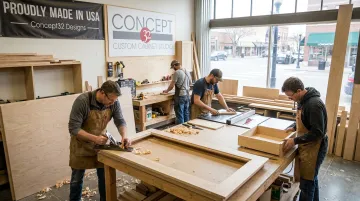
That's the foresight Concept32 Designs brings to every coffee bar project. We build each cabinet locally in our Longmont, Colorado studio, using USA-made materials and master builders on every job.
Free in-home consultations are available throughout Boulder County, Denver, Fort Collins, and the Northern Front Range. This lets you plan your coffee bar around your actual space, not a showroom floor plan.
Custom options worth considering for your build include:
- Dovetail drawers for long-term durability
- Motion lighting for hands-free illumination
- Aventos vertical lifts for appliance garages that disappear when closed
Whether you're converting a coat closet or extending your existing kitchen cabinetry, a coffee bar designed around your actual habits will get used far more than one designed to just look good in photos.
Frequently Asked Questions
What is a built-in coffee bar?
A built-in coffee bar is custom, permanently installed cabinetry designed for brewing and storing coffee essentials. Unlike a portable cart, it's fixed in place and matches your home's existing finishes.
What should be included in a built-in coffee bar?
At minimum, plan for dedicated storage, appliance space, and built-in outlets. Plumbing is optional but a popular upgrade for easy filling and cleanup.
What is the best countertop material for a built-in coffee bar?
Quartz or engineered stone is the top pick for stain resistance and low maintenance. Marble and butcher block are stylish alternatives but require more upkeep around daily spills.
What is a good height for a coffee bar?
Standard lower-cabinet height works well for most homes, though the finished height depends on your countertop thickness and cabinet base. Concept32 Designs' team can adjust it to your specific needs.
How much space do I need for a built-in coffee bar?
Even a narrow 24 to 48-inch nook can work, depending on your appliances and storage needs. Larger setups with a sink or wine fridge will need additional width.
Can I add a sink to my built-in coffee bar?
Yes, with proper plumbing access, adding a sink is a popular upgrade for easy cleanup. It requires coordinating water supply and drainage before cabinet installation, so plan this early with your designer.